
Is AI Killing Creativity or Changing Where It Lives?
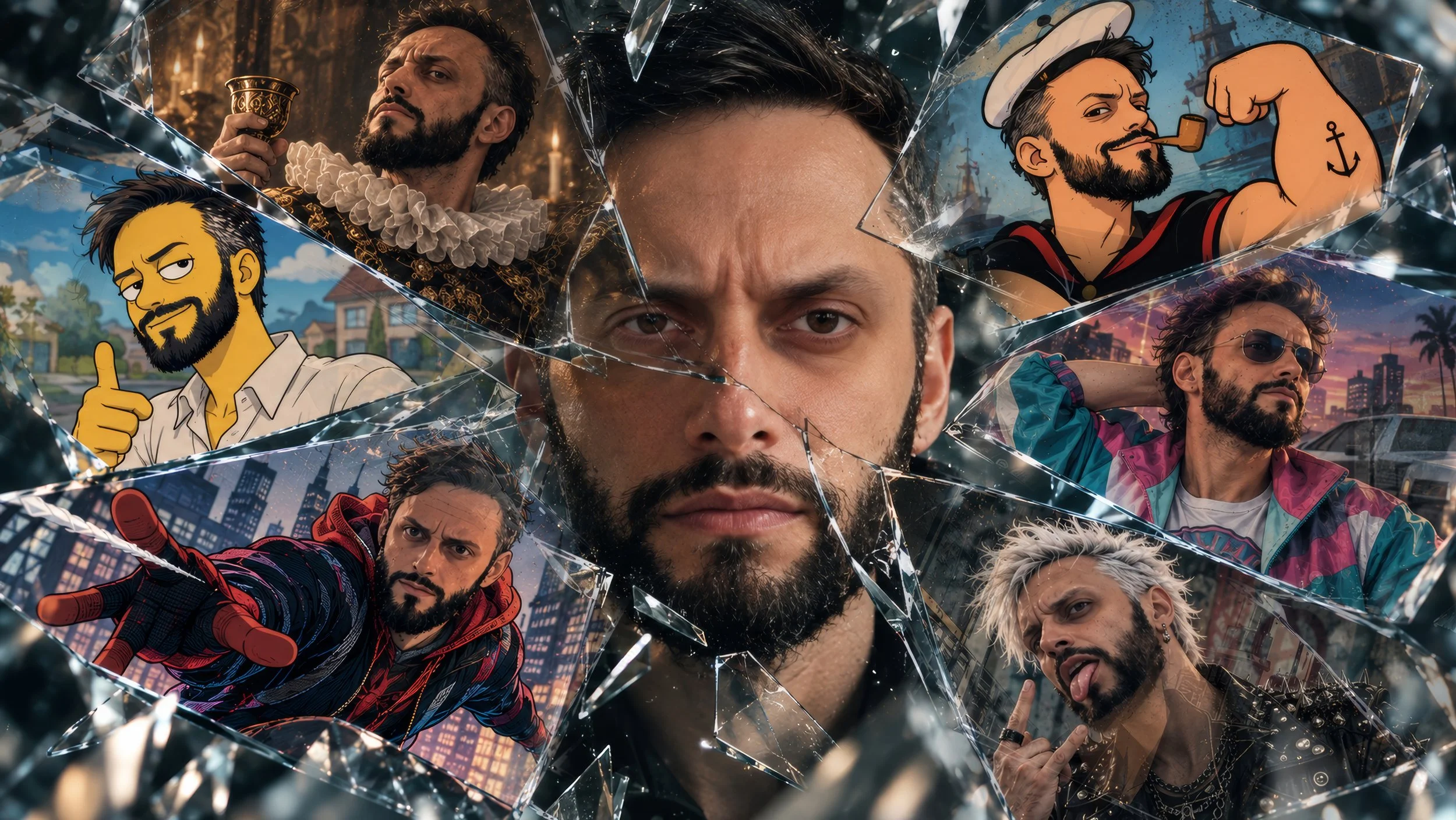
Like everyone else, I started by seeing what AI could do. The real creative challenge is what you choose to do with it next. Image created with AI in October, 2026
AI has made it easier than ever to create something impressive. That does not necessarily make us more creative. The bigger opportunity may be learning what to do once the novelty wears off.
When generative AI first became widely accessible, everyone seemed to try the same things.
Turn yourself into an animated character. Reimagine a photo in the style of a famous artist. Create a cinematic portrait. See what you might look like in another time, another place or another visual world.
I did it too.
I took one of my travel photos and experimented with some of the styles that were appearing everywhere online. One version turned me into something resembling a Ghibli character. Another sent me back a few centuries as a Baroque portrait. They were fun, surprisingly convincing, and produced in a fraction of the time it would once have taken to create something similar.
There was something genuinely exciting about it. AI allowed me to move quickly, test ideas, explore directions and see possibilities before I might previously have finished describing them.
But there was also something familiar about what we were all doing.
We were following recipes.
Creativity often starts by replicating
There is nothing wrong with that. When you learn Photoshop, you might start by watching a tutorial and recreating a particular effect. When you pick up a camera, you copy techniques you have seen elsewhere. When you learn to cook, you follow the recipe before you start changing the ingredients.
It is part of learning what you are capable of.
The problem comes when your initial experiments become your end destination.
A lot of AI-generated content currently feels like that. It is polished. It is fast. Sometimes it is technically extraordinary. But much of it is also easy to forget because the thinking behind it has not moved much further than the demonstration.
That does not make AI uncreative.
It means we are still learning how to use it creatively.
I keep coming back to three artists from the past because each, in a very different way, challenged the idea that creativity has to be demonstrated through difficult or traditional acts of making.

Some of my experiments in 2025 with AI filter generation, using a photo from my trip in Europe.

Baroque Style

Ghibli Style
What past artists can teach us about AI and creativity
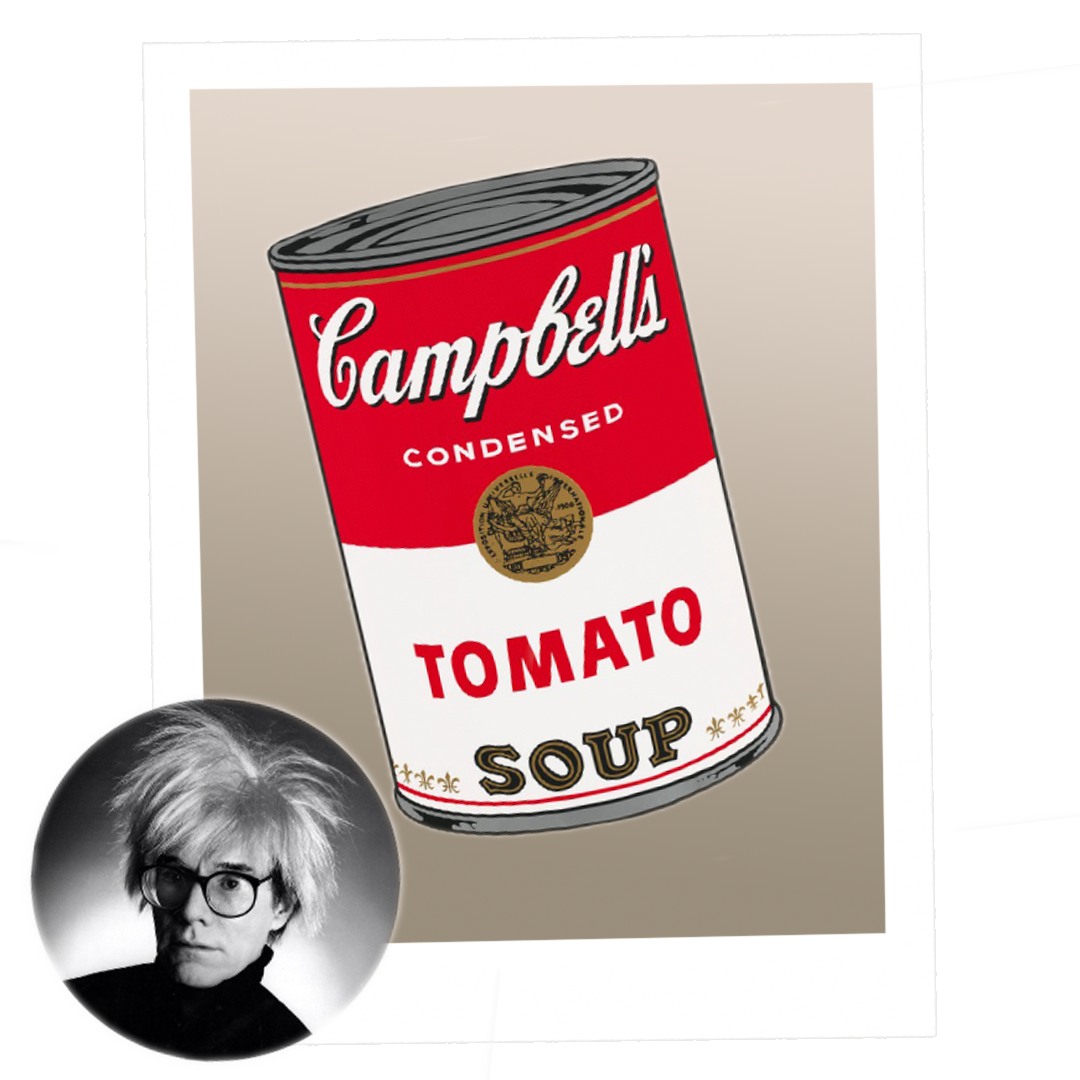
Andy Warhol turned the ordinary into art.
He made us question what we value.
A soup can. Mass-produced.
Suddenly a masterpiece. Sound familiar?
Andy Warhol took the ordinary language of mass production and consumer culture and turned it into art. A soup can was something people walked past in a supermarket. Put into another context, repeated and reframed, it became something people were asked to look at differently.
Portrait: Makos, C. (1986) Portrait of Andy Warhol [Photograph]. Available at: https://www.1stdibs.com/art/photography/black-white-photography/christopher-makos-andy-warhol-portrait-black-white-photography-celebrity-artist/id-a_15560072/ (Accessed: 29 March 2025).
Artwork: Warhol, A. (1968) Tomato [Screenprint]. Available at: https://whitney.org/collection/works/5634 (Accessed: 29 March 2025)
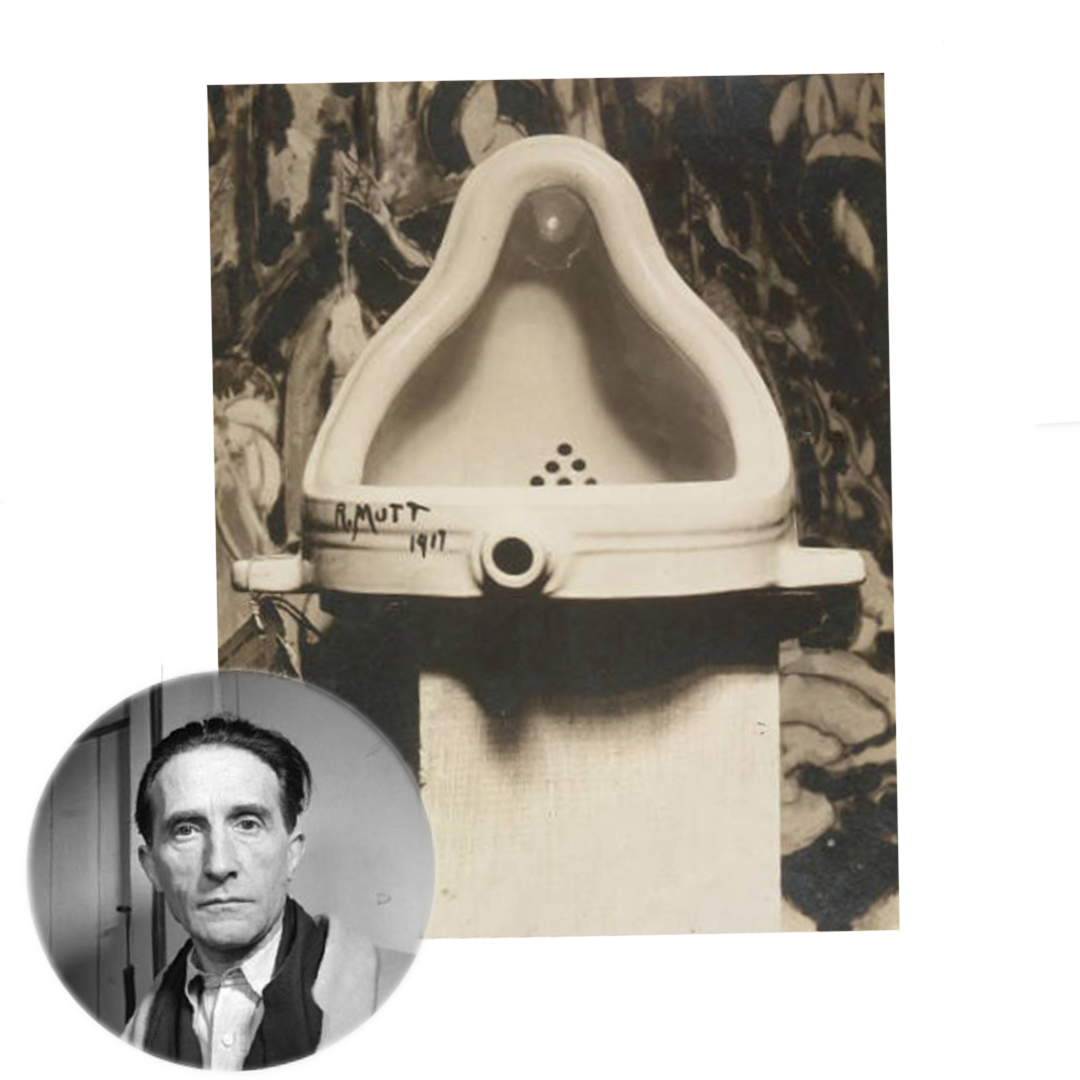
Duchamp flipped the art world!
Sign a toilet, call it art.
He took a manufactured urinal, changed its context, and called it art. The physical act involved was almost ridiculously simple. That simplicity was precisely what made the idea so disruptive.
Portrait: Bellon, D. (1938) Portrait of Marcel Duchamp [Photograph]. Estate of Denise Bellon, Paris. Available at: https://www.toutfait.com/issues/issue_1/Articles/popup_1.html (Accessed: 29 March 2025)
Image: Stieglitz, A. (1917) Fountain, photograph of sculpture by Marcel Duchamp [Gelatin silver print]. Succession Marcel Duchamp, Villiers-sous-Grez, France. © 2006 Marcel Duchamp / Artists Rights Society (ARS), New York /ADAGP, Paris / Succession Marcel Duchamp.
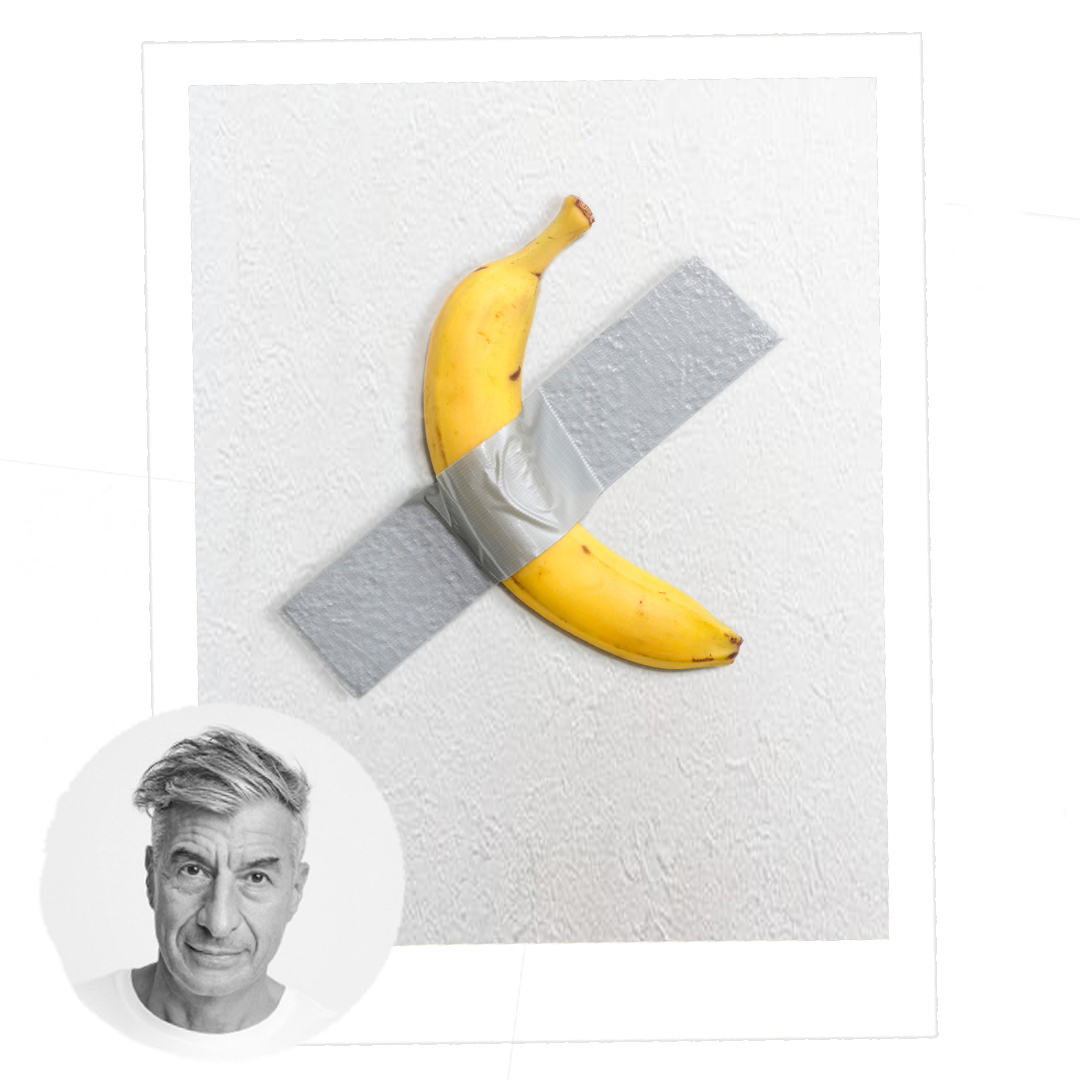
Cattelan duct-taped a banana to a wall.
It sold for $120,000. Absurd? Sure.
But also… kind of genius. He turned a fruit into a mirror. Reflecting our obsession with value, spectacle and meaning.
A piece that generated attention, argument and questions about value, spectacle and meaning. Again, the materials could hardly have been simpler.
Portrait: Artsy (2024) Portrait of Maurizio Cattelan. Courtesy of Maurizio Cattelan Archive and Perrotin. Available at: https://www.artsy.net/article/artsy-editorial-influential-artists-2024 (Accessed: 29 March 2025).
Image: Artsy (2024) Comedian by Maurizio Cattelan, 2019. Courtesy of Sotheby’s. Available at: https://www.artsy.net/article/artsy-editorial-influential-artists-2024 (Accessed: 29 March 2025).
So what does this mean for AI and creativity?
Warhol, Duchamp and Cattelan all worked with ideas, objects, or processes that could appear simple on the surface. What made the work significant was not the difficulty of producing it, but the thinking behind it. They reframed familiar things, shifted context and used small creative decisions to create a much larger impact.
That is where I think the comparison with AI becomes useful. The tools are getting easier to use and the outputs are getting faster to produce, which means the physical effort involved in making something is reducing. But that does not mean the creative effort should reduce with it. If anything, the opposite is true.
As physical effort drops, mental effort has to rise.
The real challenge is no longer simply whether we can make something. It is whether we understand what we are trying to say, why we are choosing one direction over another, and what we can bring to the work that the tool will not arrive at on its own. That is the difference between following the recipe and knowing when to move beyond it.
There is nothing wrong with starting by copying what already works. That is how most of us learn new tools. The problem is when we stop there. AI gives us access to more techniques, more directions and more possibilities than ever before, but the value comes from what we do with that access.
Learn the tool, then make it your own
AI makes it easy to be impressed by what is suddenly possible. I often catch myself thinking, look what I can do with this. But that is probably the wrong place to stop.
Use AI to explore, test and learn. Then bring your own judgement, experience and point of view to the result. The goal is not to generate more, but to make better creative decisions.
It also helps to keep expertise in perspective. If someone with limited experience can create something impressive with AI, imagine what someone with deep knowledge of that craft can do with the same tools. Easier access should broaden what we attempt, but it should also encourage us to collaborate more. The best ideas rarely come from one person knowing everything. They come from people bringing different skills, experience and perspectives to the same problem.
AI may expand what each of us can do alone, but our biggest leaps will still come from what we build together.